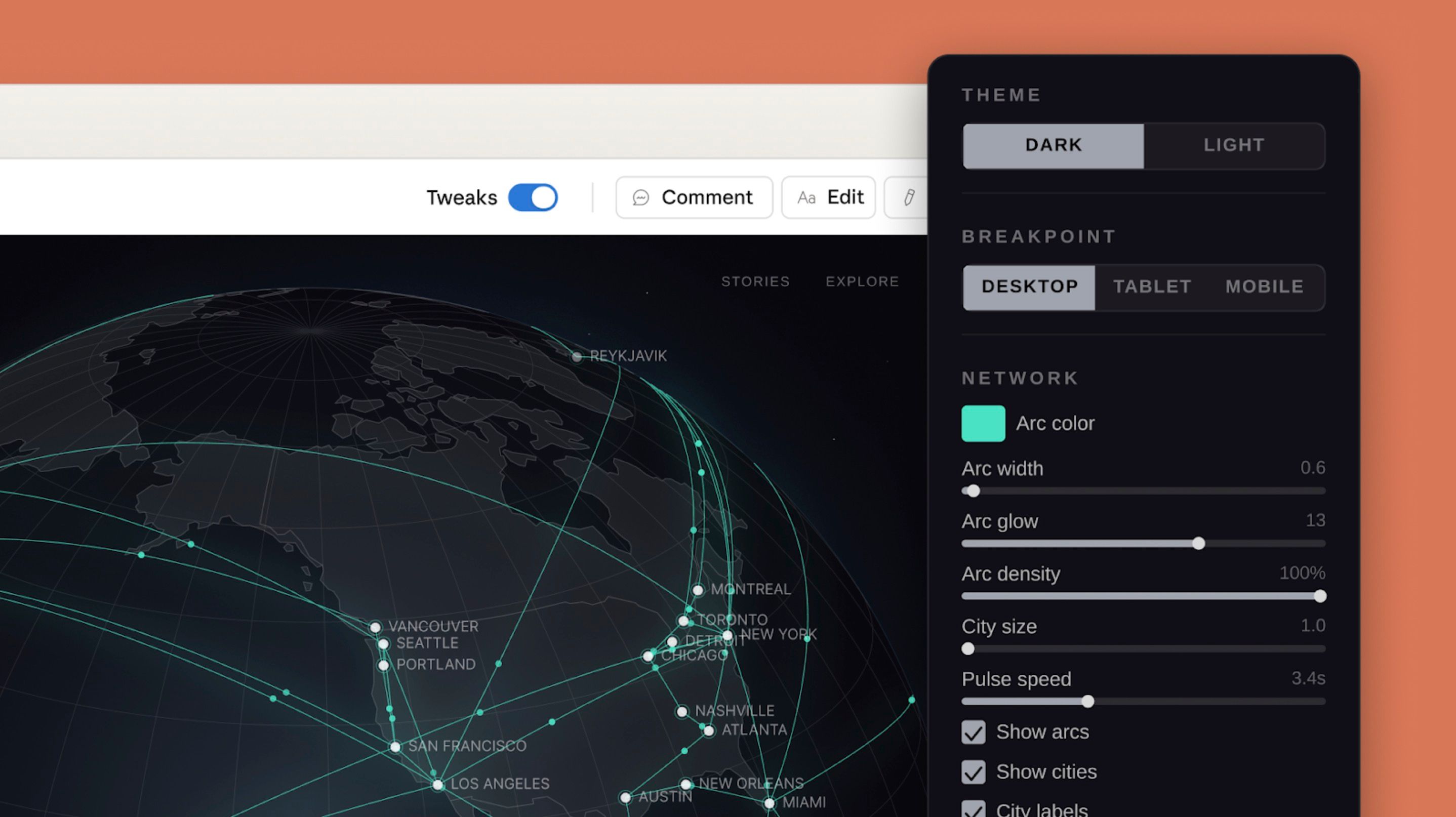
Something clicked for me around the time I started using Cursor. Then Claude Code made it permanent. At that point, I realized the shift had already happened and there was no going back.
I wasn't writing code the same way anymore. I was describing systems, making decisions about shape and structure, and letting the agent handle the rest. The job had changed, and honestly, so had I.
The Uncomfortable Truth About "Craft"#
There's a version of this story where agentic AI is a tragedy for software engineers. Years spent mastering a language, learning to write clean, elegant code, building that internal library of patterns and intuitions. And now a model can produce a working implementation in seconds.
I get why that stings. I felt it too.
But here's what I've come to understand: for most of us working inside companies, that creative satisfaction had already been stripped away long before the agents showed up. The combination of ever-growing toolchains, shrinking delivery timelines, and layers of process had already turned professional development into something closer to assembly work than craftsmanship.
The code I actually loved writing was the stuff I built for myself. My own projects, my own vision, no one else's constraints. That's where the joy lived.
What tools like Claude Code have done is give that feeling back to me in a professional context. I'm no longer bogged down implementing features I care little about. I can focus on the vision, the architecture, the ideas in my head. And I can move fast. That's not a loss of craft. That's craft operating at a different altitude.
From Syntax Expert to System Thinker#
Let's talk about what "language agnostic" actually means, because it's not what most people assume.
It doesn't mean programming languages stop mattering. Python is still better suited for certain problems than Go. Rust still makes sense where memory safety is critical. That distinction isn't going away.
What's going away is the premium on syntactical expertise. Job postings have historically read like a grocery list: Python, JavaScript, C++, TypeScript. The idea being that a developer who can't write idiomatic code in your stack is a liability. That logic is going to erode. Fast.
When an agent handles the implementation details, what you actually need is a conceptual understanding of what a language does well, not the ability to recite its syntax from memory. The emphasis shifts from "can you write it" to "do you understand why."
This is the move from coder to orchestrator. And it's already happening in production workflows right now with tools like Cursor, Windsurf, and GitHub Copilot Agent Mode.
What the "Meta-Builder" Role Actually Demands#
Here's where I want to push back against a comfortable narrative. Some people hear "orchestrate agents" and think the hard part is over. It isn't. The hard part just moved.
The skills that matter most right now are the ones that are hardest to fake with a prompt. Two in particular worry me when I look at how teams are adopting these tools.
System architecture. Agents write code. They don't do software engineering. They don't reason about how a decision made in one service will ripple through five others in six months. They don't think about operational complexity or team ownership or what happens when the requirements change. That judgment belongs to the human in the loop.
Security. This one is genuinely alarming. Agents will produce functional code that is also insecure code, and they'll do it confidently. As large organizations push for heavy AI adoption while simultaneously trying to sandbox their environments, the engineers who understand security fundamentals are the ones holding the line. The others are shipping vulnerabilities at scale.
I'd also say this directly to junior engineers: don't skip the reps. No amount of vibe coding gives you the experience of debugging a production incident at 2am or tracing a performance regression through six layers of abstraction. Those hours are still the price of real engineering judgment. The agents can't buy that for you.
The Spectrum Is Collapsing#
One of the more interesting shifts I see coming is what happens to the gap between technical and non-technical people.
The floodgates are open. Someone with zero software background can now build working software. That's real, and it's not going to reverse. But I don't think this makes experienced engineers obsolete. I think it changes what the advantage looks like.
Engineers understand architecture and security. They understand efficiency tradeoffs, implementation costs, and why certain approaches will bite you later. That foundation lets them navigate agentic systems with far more confidence than someone who's never felt the consequences of a bad technical decision.
The non-technical person with bold ideas is going to learn through execution. They'll build things, hit walls, and pick up real technical intuition through the process. The AI will teach them by doing.
On the other side, the highly analytical engineer who has historically over-planned to avoid mistakes is going to have to develop a different muscle. When implementation costs drop dramatically, the obsession with perfecting every detail before shipping becomes a liability rather than a virtue. Technical people will need to become more comfortable with the bold, move-fast mentality that used to be the domain of the "non-technical visionary."
Both ends of the spectrum migrate toward the center. That's where the interesting engineers are going to live.
The Identity Question#
If you've defined your professional value by the languages you know and the code you can write, this moment is disorienting. I understand that. It was disorienting for me too.
But I think the engineers who will thrive are the ones who can make the conceptual jump: your value was never really in the syntax. It was in the judgment. The ability to look at a system and see what it should become. The ability to ask the right questions before a single line is written.
The agents are very good at answering questions. The engineers who know which questions to ask are going to be worth more, not less.
My honest take is that this is the best time in years to actually enjoy building software. The minutiae that used to eat 60% of my day is handled. What's left is the part I actually care about. That feels like a good trade to me.